Challenge I: The Student Experience
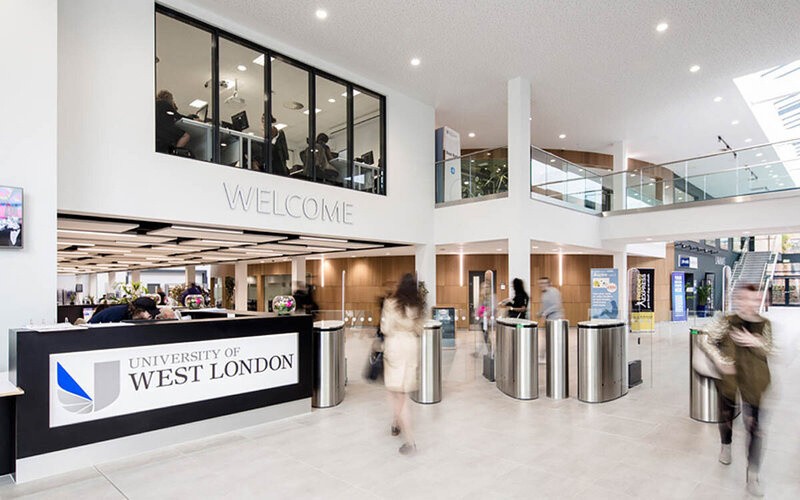
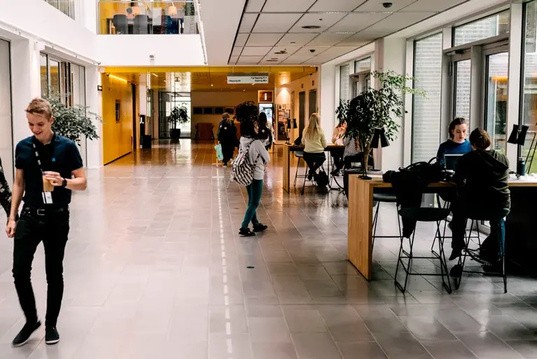
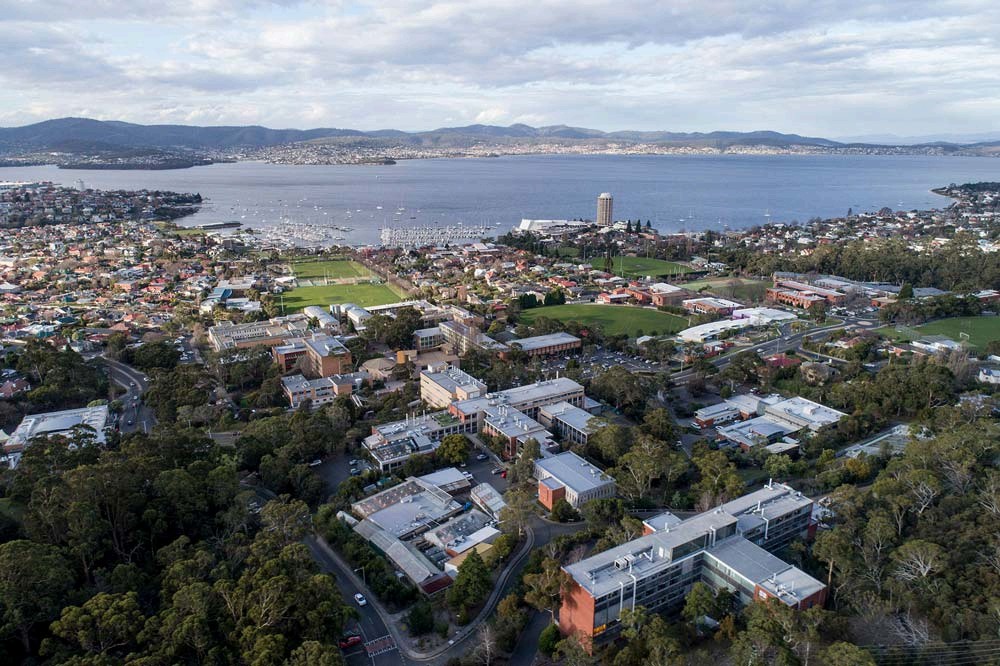
Poor wayfinding is proven to affect the student experience negatively, causing students to experience stress and uncertainty.
Solution
MazeMap provides interactive maps that show students exactly where they need to go and how to get there. The maps are accessible on mobile, tablet, laptop, or desktop PC. It’s documented that MazeMap helps to enhance the student experience, reducing unnecessary stress and uncertainty. The result is happier students, fewer late arrivals to classes, and reduced student churn.
ROI Reference
The Norwegian University of Science and Technology (NTNU) has been voted several times as one of the best places to be a student in Norway. MazeMap was also voted as the most important service at NTNU by the students themselves, with the timetabling service coming second.
Challenge II: Wayfinding
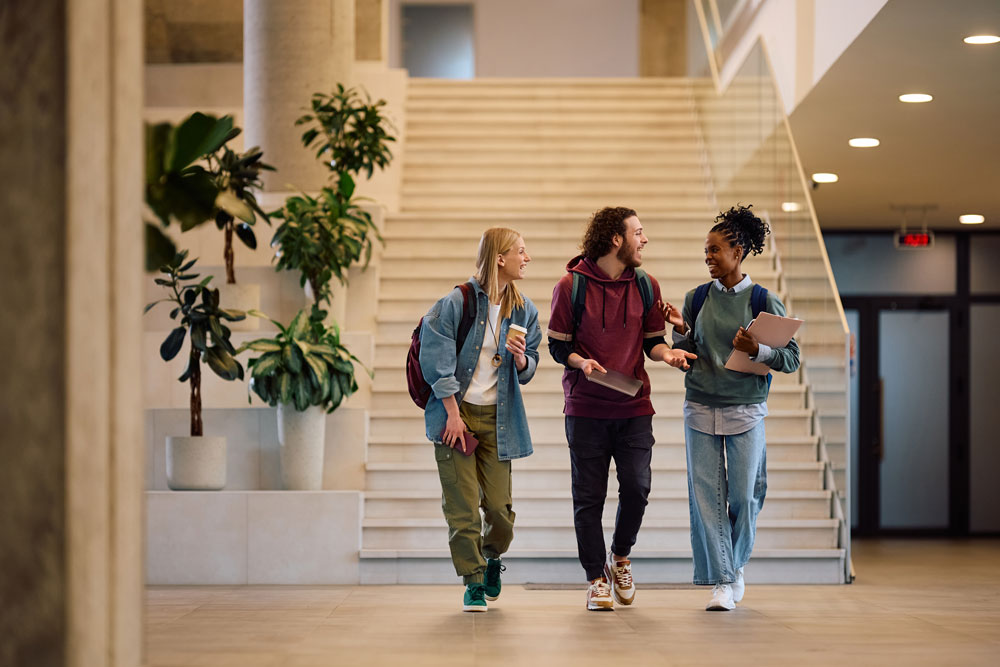
When scheduling collaborations across the campus, it can be a challenge to find bookable rooms, desks or workspaces that are available at the right times. Once booked, it can then become a challenge trying to find them. It’s documented that employees and students use a lot of time searching for meeting rooms. It’s also a common reason for employees, students, and guests showing up late to meetings.
Solution
MazeMap reduces the number of no shows and delays in meetings, lectures and other activities by sending web links or QR codes that give the user directions to a specific point of interest. Space booking solutions can be integrated with Outlook 365 or a timetabling system so that directions are automatically added to appointments on the calendar.
ROI Reference
NTNU has calculated that an employee will save, on average, 3 minutes of time spent finding each meeting location when using MazeMap. This amounts to cost savings of 540,000 Euros per year.
Challenge III: Manned Information Desks
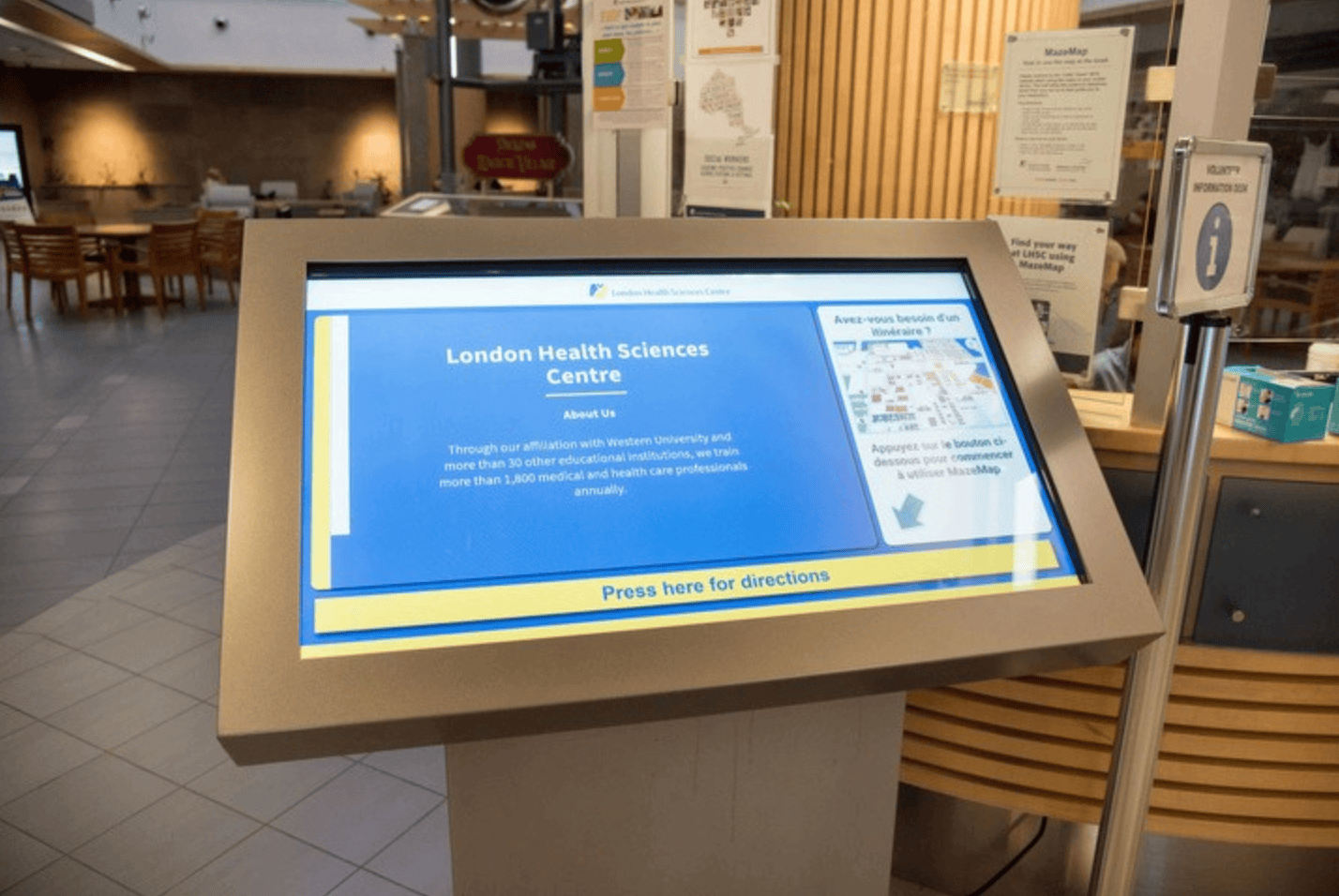
Manned information desks are expensive, and statistics show that 80-85% of all requests at information desks are wayfinding inquiries.
Solution
Kiosks that are set up with MazeMap allow users to search for whatever they are looking for. Ultimately, they serve as an easy and cost-effective replacement for manned information desks.
ROI Reference
A renowned university in Belgium reduced the need for 6 physically manned information desks by replacing them with wayfinding kiosks. This has an associated cost saving of up to 300,000 Euros yearly.
Challenge IV: Keeping Physical Signage Up-to-date
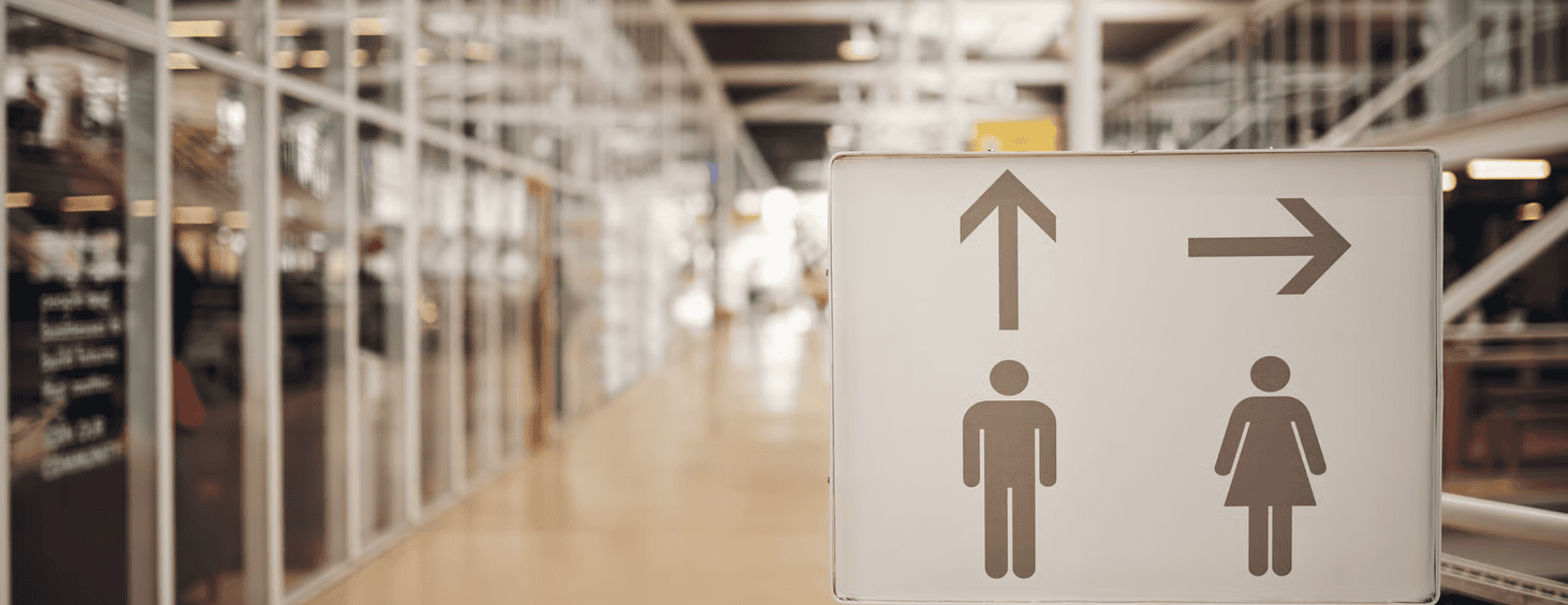
Physical signage can be hard and expensive to maintain when there are frequent changes to the building layout. Statistics show that on average, universities experience 5-10% of area change every year.
Solution
With MazeMap, changes can be reflected in the maps as they occur. A huge part of the process can even be fully automated by integrating with the university’s Facilities Management System (FMS), saving the university both money and resources.
ROI Reference
With MazeMap, NTNU is less dependent on physical signage and resources and budget can therefore be spent elsewhere.
Challenge V: Space Booking
Students and staff complain about the lack of meeting rooms, when in fact, many meeting rooms are booked and not used.
Solution
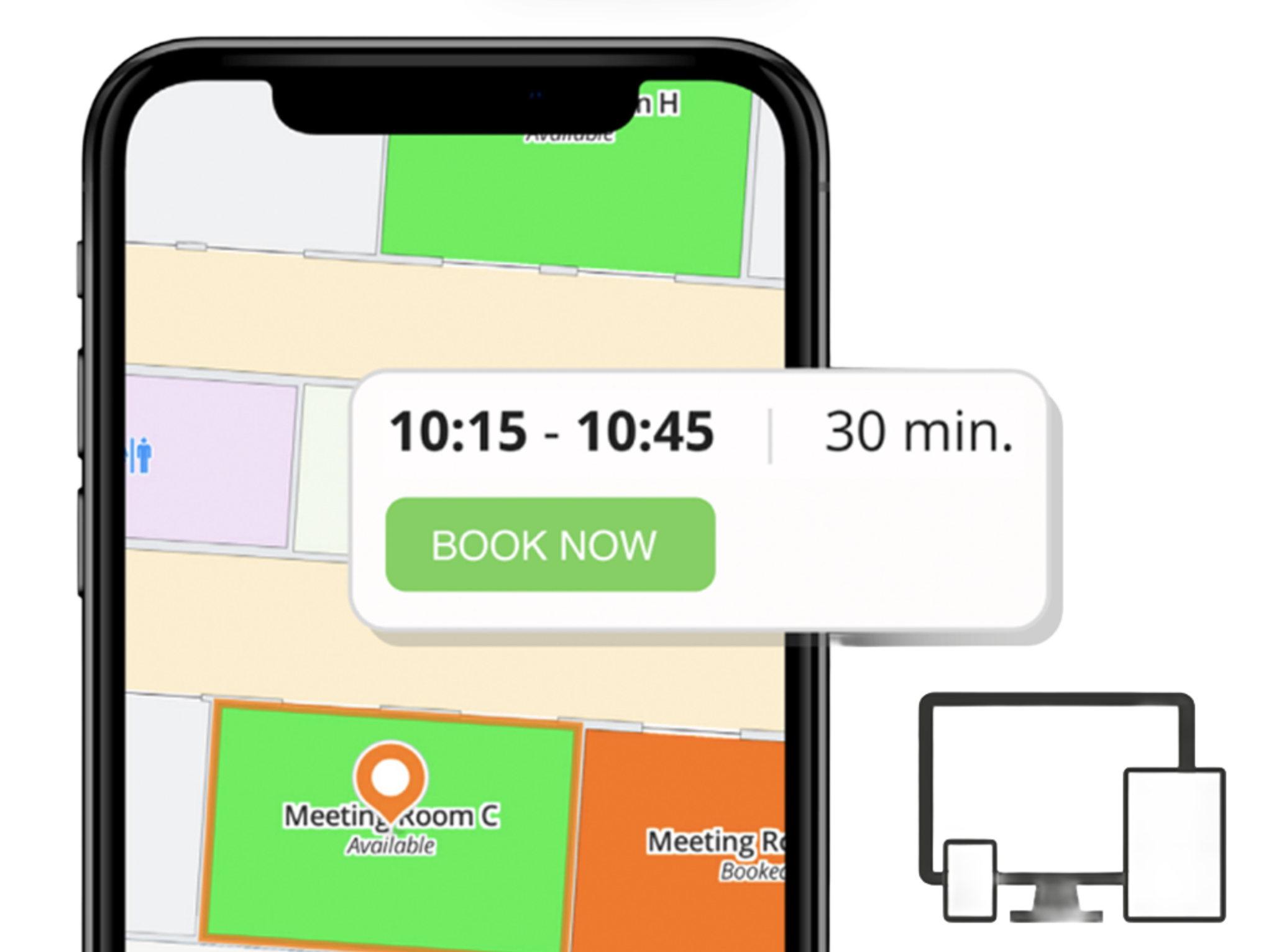
MazeMap can visualize the occupancy of workspaces and collaborative spaces, making it easy to find the closest available bookable area. If meeting rooms are equipped with sensors and are booked but not actually used, they can automatically be freed up after a given amount of time. This functionality has proven to be a huge success among students and staff, as they now have a better overview of which meeting rooms are available. A mid-size university can expect to save 100,000-200,000 Euros yearly by better utilizing their building spaces.
ROI Reference
The University of Agder, which has approximately 8,700 students, wastes approximately 120,000 Euros yearly due to poor meeting room utilization.
Challenge VI: Accessibility for Disabled or Visually Impaired Users
Most universities must comply with accessibility regulations across a broad range of building types, making physical signage even more challenging. According to most university hospitals, they use almost 50,000 Euros yearly on signage for visually impaired building users, but they are still not able to keep up to date with all changes.
Solution and ROI
MazeMap brings this solution to a mobile device and can be a cost-efficient way of complying with accessibility regulations. MazeMap navigation for disabled or visually impaired building users offers an enhanced user experience. Students are able to navigate around more independently, allowing them to feel more in control of their environment.
References
Student environment at NTNU: https://khrono.no/studentmiljo-ntnu-trondheim/her-trives-studentene-aller-best/151065
Student apps at NTNU: https://dusken.no/artikkel/24580/ni-apper-alle-studenter-br-ha/