About NTNU
The Norwegian University of Science and Technology is Norway’s primary institution for educating future engineers and researchers.
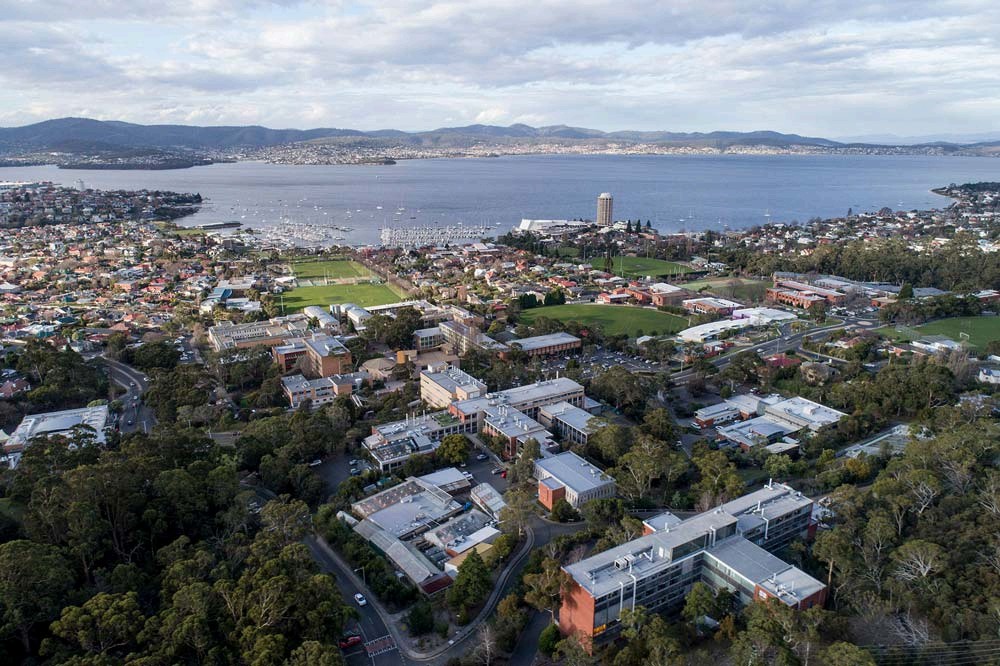
There are about 44,000 students attending NTNU, which consists of 17 large and small campuses spread across Trondheim, Gjøvik and Ålesund. All together, NTNU owns and rents more than 700,000 m².
Challenges at NTNU
With 700,000 square meters of indoor space, 17 campuses and 144 buildings, it’s hard for students, employees and visitors to find their way around to different lecture halls, meeting rooms, computer labs, reading areas, cafés, toilets, parking and more. Existing maps were either insufficient or difficult to use when they were needed.
MazeMap at NTNU
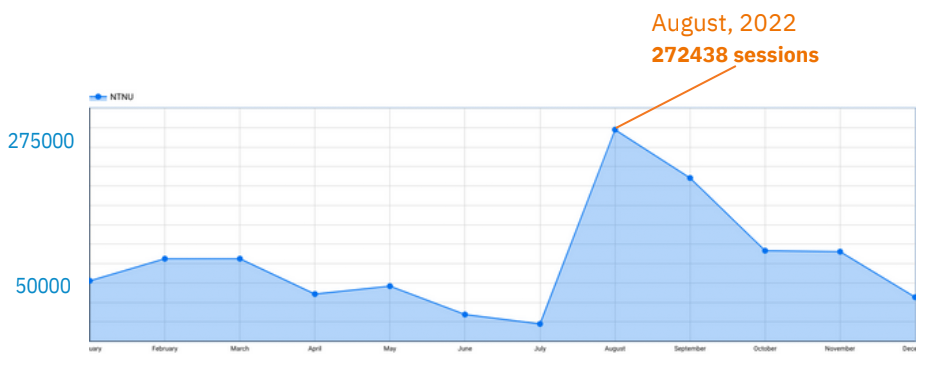
MazeMap was first launched at NTNU’s most populous campus in August 2011, and quickly became very popular. In 2022, the university registered over 12.5 million user sessions.
During 3 weeks of semester start 2022, MazeMap registered around 265,000 sessions. In August 2022, MazeMap recorded 272,438 sessions.
“NTNU Kalvskinnet campus has achieved remarkable time efficiency through MazeMap. Tracking this project, we are in route to free approximately 3,000 hours this first year. 1,000 hours will be accounted for through the kiosk solution, while the MazeMap app will contribute with the remaining 2,000 hours. This streamlined navigation experience empowers staff and students to optimize their schedules and focus on more meaningful pursuits, enhancing overall campus efficiency.”
- Vegard Nilsen, Project Leader, NTNU
Two Main Use Cases at NTNU
During Planning
Before a lecture, conference, event, meeting or visit, MazeMap is used to locate the right building and where the room is located within that building. Parking, public transport, and similar information are also found in the map.
Navigation on Campus
When users are on their way to a meeting or lecture, they can see their own position on the map as a blue dot, along with a blue path leading them to the destination.
MazeMap Uses Existing Data and Infrastructure at NTNU
MazeMap uses existing floor plans from NTNU’s Facility Management System, which form the basis for the maps. These are interpreted automatically, making it easy to update the maps when facilities are modified.
To find the user’s position indoors, the existing WiFi network is used. The accuracy of the positioning is dependent on the wireless coverage. At NTNU, the accuracy is normally around 5-10 meters, and in some places down to the meter.
How Is MazeMap Used?

“The School of Entrepreneurship uses MazeMap when sending out invitations to events on Campus, and where external parties are invited. The link is attached so it is easier for them to find their way.”
- Janagan Balasingham, NTNU School of Entrepreneurship

“I usually attach a link to MazeMap in the information letter I send out when we arrange conferences at Gløshaugen.”
- Jorunn S. Sommervold, NTNU Videre
“We recommend MazeMap to everyone who drops by and asks for directions to buildings or rooms. It’s students, employees, external visitors, and delivering companies. We have the impression that this is genius.”
- Marit Grønning-Moe, Senior Engineer, NTNU Maintenance Section
NTNU Videre is a leading conference organizer, which assists in the organization of national and international meetings and conferences.

“At semester start 2016 MazeMap was used to help students and employees 30,000 times per week and the student magazine ‘Under Dusken’ has rated MazeMap as the most important app affecting the daily lives of the students. We highly recommend MazeMap.”
- Martin Fjeldvær, Senior Advisor, Communications
The Maintenance Section is responsible for access control for students, employees and visitors.

“MazeMap is invaluable when it comes to finding rooms you haven’t been to before. It is easy to find the right room and the route that is shown is easy to follow.”
- Synne Mari Pedersen, freshman, Industrial Economy & Tech. leadership at NTNU
Interview, Dagens Næringsliv, 14.09.2011.

“With this service in your pocket, you will no longer feel small and lost in the meeting with big, complex areas.”
- Jan Erik Kaarø, Deputy, NTNU Department of Communications