Why universities from Michigan to British Columbia are rethinking how students move through space
Ask any university where the student journey begins, and you’ll hear about application portals, outreach campaigns, or the virtual tour. But the journey that shapes a student’s early experience often starts with something much simpler:
“Where do I go now?”
Not figuratively. Literally.
Where’s Building B?
Which of the three entrances is correct?
What floor is Student Services actually on?
At large, complex campuses in regions like Southern California, Ontario, or Southeast Michigan, these seemingly small questions are anything but.
They represent the start of a silent struggle that plays out every semester, especially for new, commuter, and first-generation students.
When the Tour Ends, the Friction Begins
The digital campus tour has come a long way.
High-resolution flyovers, immersive 360° walkthroughs, and scripted ambassador voiceovers, all designed to evoke connection and campus pride. These experiences are valuable. But they were never designed to support real-world movement.
Once students arrive, the emotional impression fades quickly if they’re met with confusion and directional guesswork.
The reality is: we’ve invested heavily in how campuses are shown, but not enough in how they are used.
The Hidden Curriculum: Spatial Literacy
For many students, the first learning curve isn’t academic, it’s spatial.
- Decoding building codes that only make sense to staff
- Navigating campuses with disconnected signage
- Figuring out what “Lower Level A” means when maps conflict
- Losing time (and confidence) trying to find the right service window or classroom
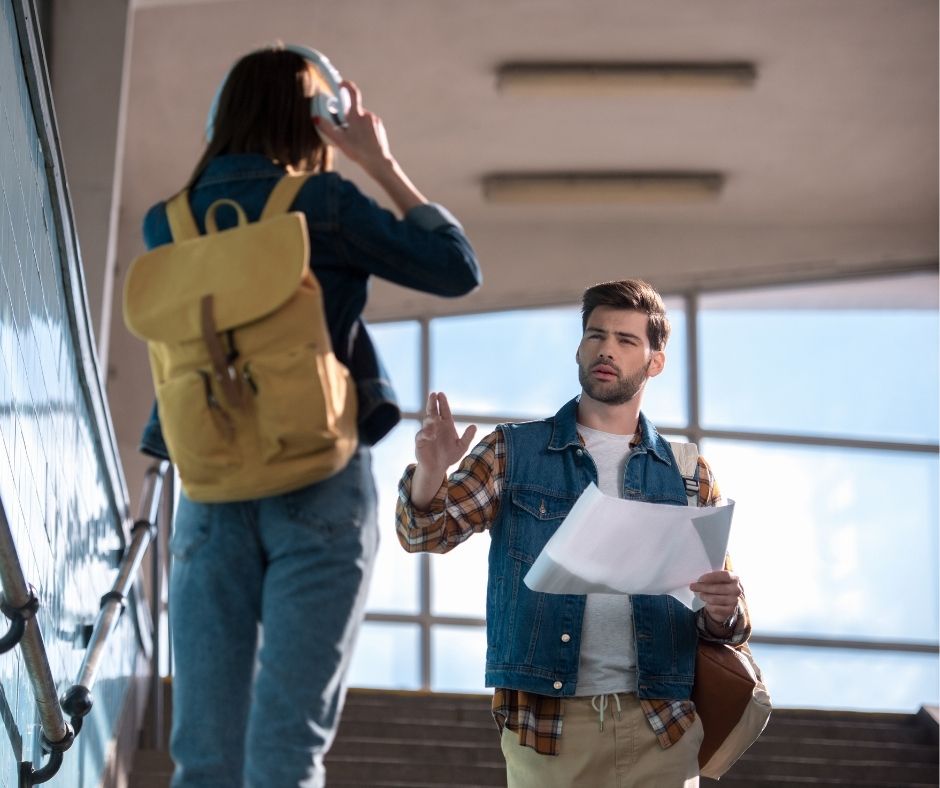
It’s what education researchers refer to as the hidden curriculum, the unspoken systems that reward insider knowledge. And it disproportionately affects the students that institutions work hardest to support: commuters, transfer students, first-gen learners, and international students.
The Spatial Gap in the Student Experience
This gap shows up most clearly at commuter-heavy and multi-campus institutions, including both colleges and universities, where the ability to move through physical space directly impacts student engagement.
Some institutions have already begun addressing it:
- Oakland Community College, Michigan - Serving five campuses across Southeast Michigan, OCC implemented MazeMap to support first-week navigation, ease congestion during orientation, and reduce reliance on printed maps and staff for directions.
- Salt Lake Community College, Utah - With a student body spread across the Salt Lake Valley, SLCC uses MazeMap to make campus services and classrooms easier to locate, especially for students balancing academics with work and family commitments.
Others facing similar spatial challenges include:
- Santa Monica College, California
- University of Texas at Arlington - one of the largest commuter campuses in the U.S.
- Toronto Metropolitan University, Ontario - vertical, urban, and complex
- Simon Fraser University, British Columbia - spanning mountaintop and downtown campuses
- Northern Virginia Community College, operating across the DC Metro region
In each case, the core issue is the same:
How do you help thousands of students move confidently through a campus not built for simplicity?
The Shift: Designing for Movement, Not Just Messaging
Modern campuses don’t need another layer of visual storytelling.
They need systems that guide real-world behavior - quietly, reliably, and without friction.
That’s where MazeMap comes in.
It doesn’t replace the virtual tour - it completes it.
MazeMap adds functional value to a student’s journey the moment they arrive (or even before), embedding:
- Turn-by-turn indoor and outdoor directions
- Accessible route options
- Interactive floor-by-floor navigation
- Clickable map links inside event invites, course emails, or orientation schedules
- Self-guided tours built around student life, sustainability, STEM, or facilities
- Real-time, mobile-friendly maps - no app required
The result?
Less confusion. Faster wayfinding. A smoother, more confident entry into campus life.
This Isn’t About Maps - It’s About Trust
When students can’t find where they’re going, they don’t just lose time - they lose momentum.
And when that confusion builds up, it impacts attendance, engagement, and retention in ways institutions don’t always track.
Navigation isn’t an operations problem.
It’s a student experience problem.
And for colleges and universities, the question is no longer whether students can see your campus.
It’s whether they can move through it with confidence.