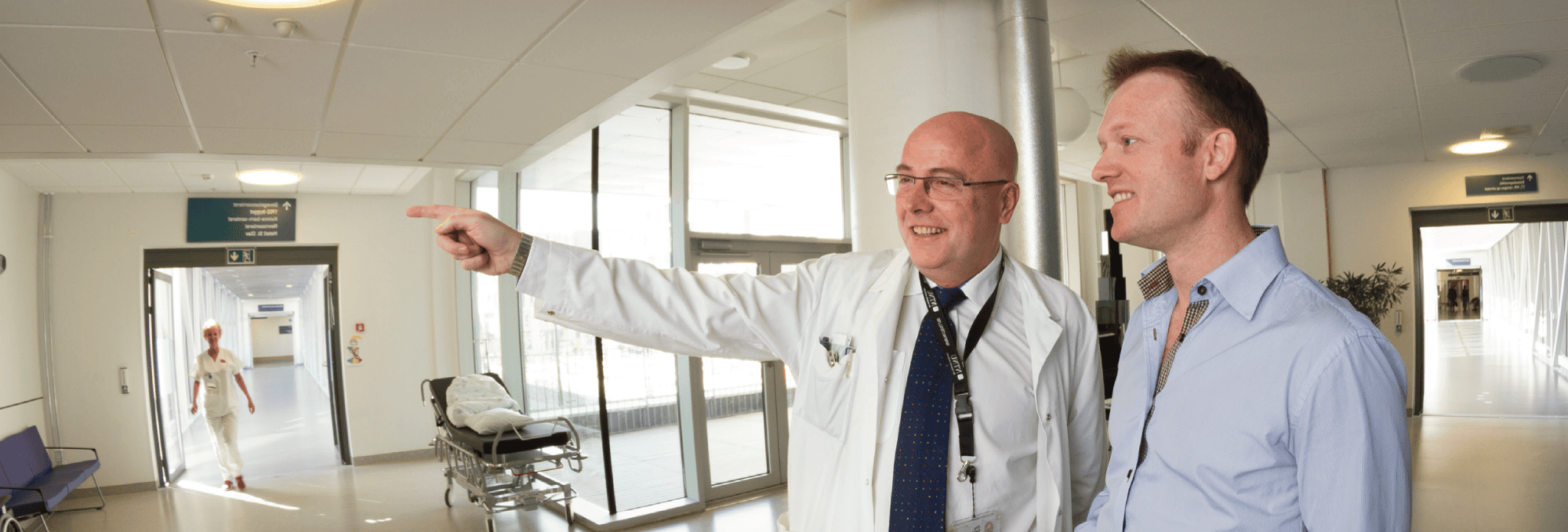
St George’s, Epsom and St Helier University Hospitals and Health Group (gesh) has introduced MazeMap at St George’s and Epsom hospitals.
The team needed digital wayfinding that could keep pace with changing departments, fit the available funding and be maintained by hospital staff. The implementation brought together map creation, staff training and patient engagement.
The project is still at an early stage. Its story so far offers practical lessons for other hospitals planning a wayfinding service, from securing innovation funding to preparing local IT teams for kiosk setup.
The project at a glance
· Two hospitals: St George’s and Epsom hospital.
· Funding: a successful proposal for New Hospital Programme innovation funding.
· Priorities: easier navigation, inclusion and maps that staff can update as services move.
· Implementation: map creation, staff training, patient engagement and a phased kiosk rollout.
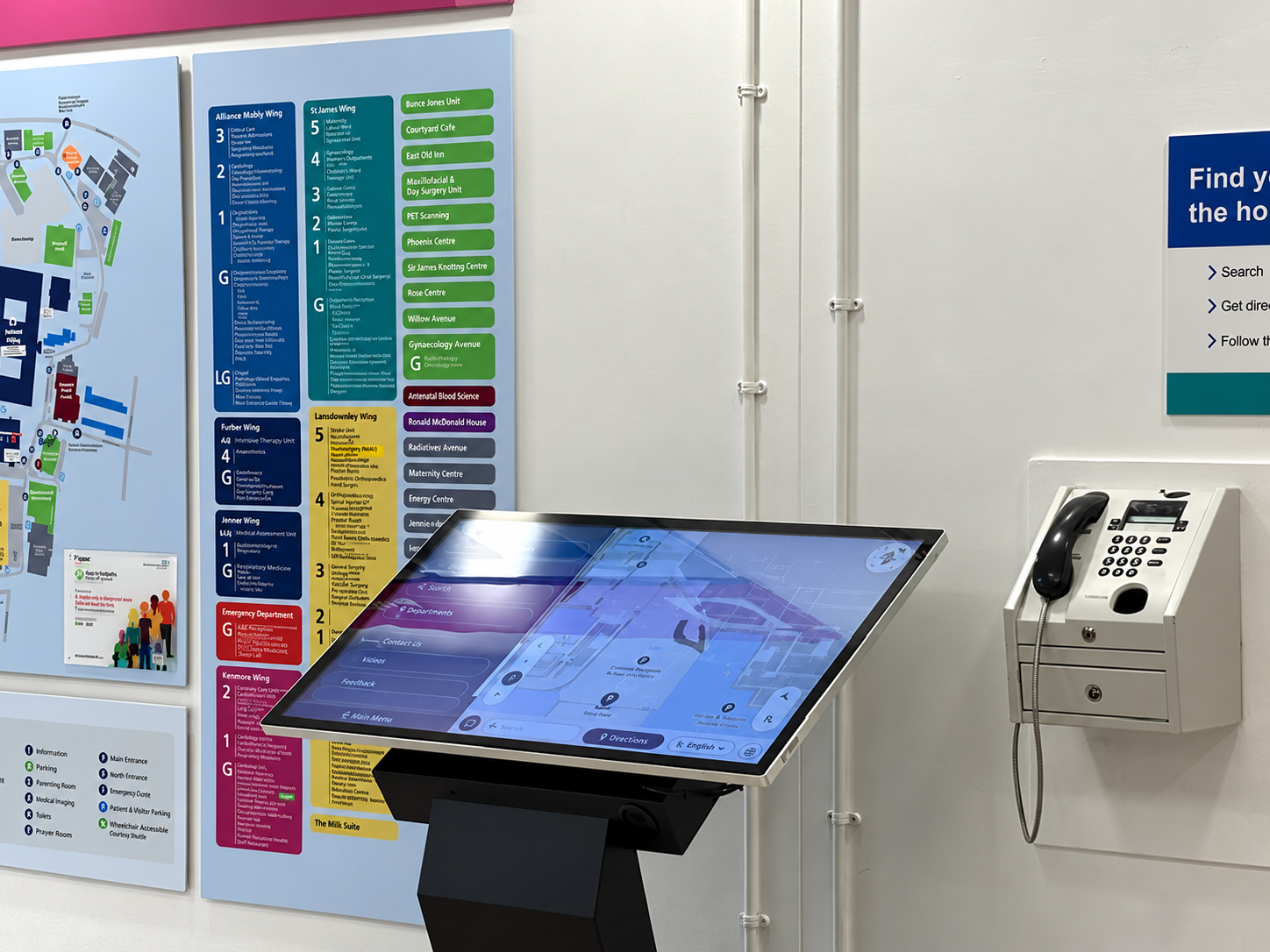
Keeping directions current in a changing hospital
At St George’s, a large site with multiple buildings, finding the right department can be difficult even for people who know the hospital. Renovation work and service relocations add to that challenge.
David Roskams, Group Director Digital Transformation, had experienced those difficulties himself. The team wanted to make navigation less stressful for patients while giving the organisation a quicker way to update directions when services changed.
Accessibility was part of the decision from the outset. The team considered the needs of people with visual impairments, neurodiverse patients and people whose first language is not English. Digital wayfinding offered an opportunity to support a wider range of needs than static signs alone.
How the team secured funding
Participation in the New Hospital Programme gave the team an opportunity to apply for innovation funding. Roskams met clinical and management colleagues to discuss potential projects, and digital wayfinding emerged as a proposal that addressed a local need and aligned with the programme’s interest in future hospital design.
The application succeeded, making it possible to take the project forward as a pilot. Roskams described an ambition for the learning to feed into Hospital 2.0, alongside improving the experience of patients and staff at the two hospitals.
For other hospital teams, this is a useful example of how a clearly defined operational problem can become a proposal for innovation funding. The route used here depended on the organisation’s participation in the programme.
Why the hospitals chose MazeMap for hospital wayfinding
The decision brought together three practical requirements: a solution within the available funding, a fit with the hospitals’ existing infrastructure and maps that hospital staff could maintain. The team reviewed available solutions and sought references from NHS organisations with experience of digital wayfinding. MazeMap stood out as a comprehensive option within the funding available.
Local infrastructure also mattered. Wi-Fi coverage presented difficulties, so the team needed a wayfinding approach that could be introduced without dependable live indoor positioning. The maps were created from floorplans; a reliable moving “blue dot” showing the user’s position remained a future improvement dependent on suitable infrastructure.
The ability to maintain the maps internally was another important advantage. Once trained, hospital staff could update department and service locations as the estate changed.
How onboarding prepared hospital staff to manage the maps
Roskams described map creation and onboarding as thorough and well supported, with a responsive team available to answer questions. Training helped colleagues prepare to take responsibility for future map changes.
“The onboarding experience was very good. It was thorough, there was a lot of support, and the team was quick to respond to questions. The training was very helpful and straightforward. The fact that our own staff can easily be trained to use MazeMap is another huge advantage.”
David Roskams | Group Director Digital Transformation
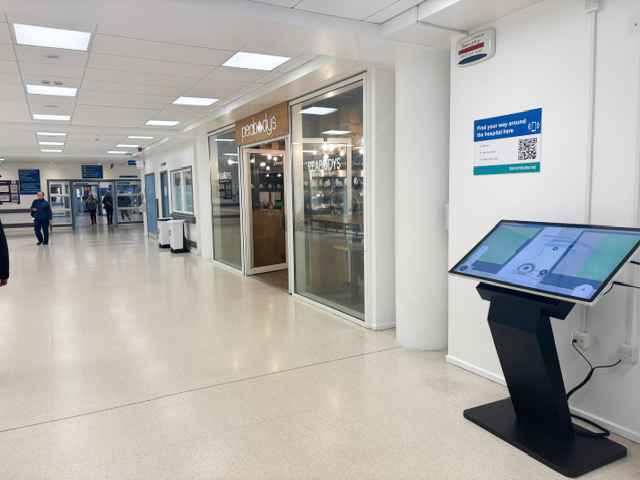
The kiosk rollout brought a separate lesson. At Epsom, the local IT team needed clearer guidance on configuring MazeMap for the touchscreen environment. Roskams fed this back to MazeMap.
That experience gives other hospitals a practical point to include in their plans: agree the kiosk configuration requirements and support arrangements with the local IT team early.
Involving patients before wider evaluation
“As part of the implementation, we undertook patient engagement sessions. We talked patients through the product, then asked them to use it themselves and tell us about their experience. That user experience work was part of how we introduced the service.”
Paul Sheringham | Group Head of Digital Communications
Volunteers also took part in the engagement work. This gave the project team an opportunity to hear how people experienced the maps before undertaking a broader review after launch. Early feedback was encouraging, but it was not a formal measure of outcomes across the hospital population.
Helping people get started mattered too. QR-code posters supported awareness, while short adoption videos complemented the user guide.
What comes next
The immediate achievement is a digital wayfinding service across two hospitals, backed by staff training and patient engagement. The next stage is to review wider feedback and understand how people use it in practice.
The team hopes clearer navigation will help patients arrive at the right place and reduce the risk of missed appointments caused by difficulty finding a department.
For hospitals considering a similar project, St George’s and Epsom offer an implementation example grounded in everyday needs: secure funding against a clear problem, choose a service that fits the estate and involve the people who will use and maintain it.
Make every hospital journey easier
See how MazeMap helps patients, visitors and staff find their way, from their door-step to the right clinic, on time. Book a 30-minute demo with our healthcare team.


.jpg)